


The Old: Antique Identifier
4.8348.00 Reviews
App Specs
- Version
- 1.0.5
- Updated On
- License
- Free
- Downloads
- 50,000+
- Developer
- LeoStudio Global Ltd.
- Categories
- Education
- Platform
- Android
Screenshots
 Analysis by AppCompare
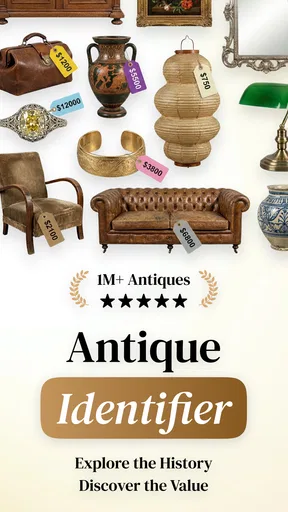
I approached The Old: Antique Identifier as a practical companion for those moments when an unfamiliar object suddenly raises a question: Is this old? Is it unusual? Could it have meaningful value? Developed by LeoStudio Global Ltd., this free education app is built around using a picture to investigate antiques, with results focused on estimated value and rarity, plus a route toward selling them. That combination makes it more interesting than a simple visual search tool, although it is also important to understand where an app-based estimate ends and proper appraisal begins.
My first impression is that the concept fits naturally into everyday life. Antique identification is often inconvenient because the useful clues are small: a maker’s mark under a vase, the back of a frame, a worn stamp on metal, or the shape of a handle. A phone camera is already the most convenient tool most people have for recording those details. Turning that image into a starting point for research is appealing, especially for someone who does not know the vocabulary used by collectors.
The app sits in the education category rather than presenting itself as a replacement for a specialist. That distinction matters. I found its strongest role in helping a beginner organize curiosity and decide what deserves further attention. It can make an inherited object feel less mysterious, but I would not treat a quick result as a final sales price or a guarantee of authenticity. The most useful way to think about it is as a first-pass research assistant, not a certified appraiser.
How network-dependent moments shape the experience
I find that the app’s connected image workflow is easiest to judge when I think about what happens around the scan: taking the picture, waiting for an interpretation, and deciding what to do with it. That makes a stable connection useful, but it also suggests a practical habit: keep clear original photos and notes so a pause in the process does not erase the research trail. The next section looks at how that routine holds up away from home.
Scanning is only the beginning
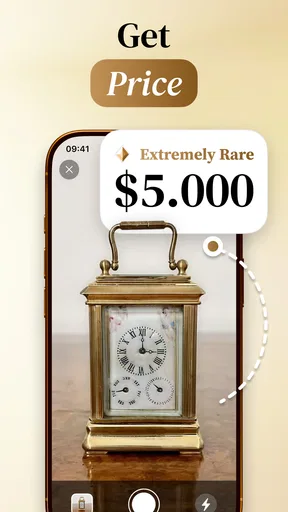
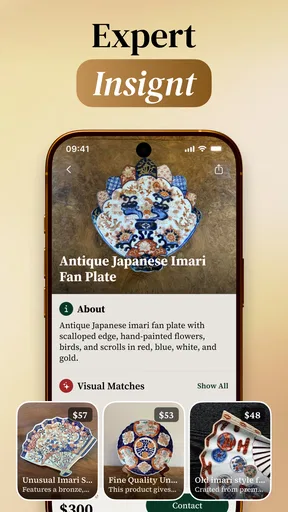
The central workflow is straightforward: take or use a picture of an antique, then look at the app’s interpretation of its possible value and rarity. What makes that workflow worthwhile is not merely the convenience of photographing an object. It gives a person a structured reason to inspect the item before rushing to a marketplace, discarding it, or accepting an overly confident opinion from someone else.
In practice, the quality of the starting image becomes especially important. I would photograph the whole object first, then capture separate close views of signatures, labels, damage, joins, decorative details, and the underside. A single attractive front-facing photo may help with broad recognition, but it can hide the very evidence that separates a common reproduction from an older piece. This is one of the app’s most useful practical lessons: identification is not just about appearance; it is about documenting clues.
Because the experience is based on image analysis and results, connectivity becomes part of the rhythm even when the user is focused on the object. In a well-connected room, the process feels immediate enough for casual exploration. In a basement, market stall, storage unit, or rural property, the same process may feel less dependable. I would avoid promising myself an instant answer in every location and would keep the original photographs available so I could try again later if the response is interrupted.
Worth Reading Before You Choose

EA SPORTS FC Mobile 26 Is a Bigger Football Game, but It Takes Time

Flipboard Shows What News Apps Must Do Beyond the Feed

Switching to Android Auto Means Rethinking Your Driving Routine

Google Calendar Makes a Crowded Week Easier to Manage

Ludo King Makes the Most of the Minutes Between Plans

Baby Panda World Brings Quick Play to Modern Phones, but Its Game Library Feels Busy
Why a result should be treated as a lead
Estimated value is a useful phrase because it suggests a range of possibility rather than a guaranteed payout. Antique prices depend on condition, provenance, authenticity, regional demand, completeness, and the difference between an asking price and a completed sale. A picture-based result cannot magically remove those variables. Even a visually convincing object may have repairs, replaced parts, or a reproduction history that is invisible from one angle.
Rarity also needs careful interpretation. An item may look unusual because it is damaged, locally made, poorly documented, or simply outside the app’s likely recognition patterns. Conversely, a familiar design may still be valuable if it comes from a sought-after maker or has an unusually strong history. I used the rarity indication as a prompt to investigate more, not as a reason to assume that an object was precious.
This is where the app compares favorably with a casual web search. Searching broad phrases such as “old ceramic bowl” often produces an overwhelming mix of modern products, unrelated antiques, and optimistic listings. The Old offers a more focused first step because the image is the starting point. However, a specialist dealer, auction house, museum reference, or dedicated collector community remains better when the stakes are high or authenticity is disputed.
Connectivity changes the social side of discovery
A connected workflow is particularly helpful when I am standing beside another person and want to discuss an object without turning the moment into a long research session. At a family home, for example, an inherited cabinet might have a metal plate, a maker’s mark, and several visible scratches. I would photograph the front, the mark, and the damaged corner, then use the app’s assessment to decide whether the cabinet deserves a deeper conversation with a furniture specialist.
The benefit is not only speed. The app can give relatives a shared starting point when everyone has a different opinion. One person may value the object sentimentally, another may be thinking about resale, and a third may be interested in its history. A picture-based estimate does not settle those disagreements, but it can help separate “I like it” from “there may be a market reason to preserve it.”
That same connectivity can become a weakness at an antiques fair. Crowded venues often have inconsistent reception, and photographing an object may be awkward when sellers are busy or when the item is behind glass. I would ask permission before taking detailed images of someone else’s stock and would record the seller’s description separately. The app can support the conversation, but it should not replace respectful buying behavior or direct questions about condition and provenance.
Using it in real mobile situations
I use mobile tools differently depending on where I am, and an antique identifier is no exception: a quiet room, a family clear-out, and a busy market each bring different constraints. I would plan the handoff from camera to follow-up research before treating any result as a decision, especially when other people own the object or its history matters. That perspective leads into the everyday situations where the app feels most useful—and where patience matters more than speed.
A useful routine for inherited objects
One realistic use case is sorting a box from a relative’s attic. Instead of photographing every object randomly, I would create a simple sequence: group similar materials together, photograph each item in good light, capture marks and labels, and note any family story attached to it. Then I would use the app to identify the pieces that appear most unusual or potentially valuable. This prevents the common mistake of spending time researching the decorative surface while ignoring the maker’s mark or repair history.
The app is also suited to a quick decision before moving an object. If I find an old-looking lamp while clearing a house, I may want to know whether it deserves careful packing rather than being placed in a donation box. A preliminary result can encourage me to preserve the wiring, shade, base, and any labels together. Even if the eventual value is modest, that documentation protects useful context.
For this kind of work, I would keep the phone steady and avoid dramatic filters or excessive cropping. Glare on glass, polished metal, and glazed ceramics can remove important details. A neutral background makes the outline easier to read, while a second image with a ruler or familiar object can provide scale for later human research. These habits are more valuable than simply taking a larger number of photographs.
When the phone is the wrong tool
There are clear situations where I would skip an image-based estimate. If the object is a high-value painting, a signed manuscript, a piece of jewelry with stones, or an item suspected to be counterfeit, I would use the app only as a preliminary clue and seek an appropriate specialist. The consequences of a wrong assumption are too serious, particularly when insurance, inheritance, tax, or legal ownership is involved.
I would also be cautious with objects whose value depends mainly on provenance. A photograph may show style and condition, but it cannot independently prove where an object came from. A family letter, purchase record, exhibition history, or previous appraisal may matter more than visual similarity. In those cases, the best workflow is to use the app to form questions, then present the images and documents together to a qualified expert.
Collectors who already know their field may find less benefit here. Someone experienced with a particular type of pottery or furniture may prefer specialist catalogues, auction archives, or a trusted dealer’s opinion. The Old is more naturally aimed at curious owners, beginners, families sorting possessions, and casual buyers who need a sensible first orientation.
What happens when the connection or result fails?
Any network-dependent image workflow deserves a recovery plan. If an image does not process, I would not immediately assume that the object is unidentifiable. I would first check the photograph itself: reduce glare, move closer, include the full object, and take a separate image of the mark or label. A clearer second attempt can be more useful than repeatedly sending the same poor photograph.
If the connection is unreliable, the practical fallback is to keep a small photo record and return to the task when the phone has a stronger connection. I would also write down the object’s dimensions, material, visible damage, inscriptions, and family history while I am still on location. That information remains useful for later comparison with catalogues or for a conversation with a dealer.
Recovery also means resisting the urge to fill in missing details. If the app produces an uncertain or surprising interpretation, I would compare it with the physical evidence rather than editing my description to make the result sound more convincing. A wrong label can send later searches in the wrong direction. Keeping the original images and notes makes it easier to correct the trail.
Making careful use of the selling angle
The selling element is attractive because identification and resale are often connected. Still, I would separate the two decisions. First establish what the object might be, then assess condition and market fit, and only after that decide whether selling makes sense. A high estimated value does not automatically mean a fast sale, and a rare object may appeal to a narrow group of buyers.
Before listing anything, I would photograph flaws honestly, preserve labels, and avoid cleaning aggressively. Polishing silver, repainting furniture, or removing old paper can destroy evidence and sometimes reduce desirability. The app may encourage a closer look at value and rarity, but the final selling preparation still requires patience and judgment.
For ordinary household objects, local selling channels may be more convenient than shipping. Fragile ceramics, large furniture, and framed pieces can lose much of their practical value once packing, transport, and buyer disputes are considered. In contrast, a small, well-documented item may be easier to compare across specialist marketplaces. The app helps with the first question, but it cannot make logistics disappear.
Data-conscious use on a phone
Since the experience revolves around photographs and connected results, I would use it thoughtfully on a limited mobile plan. I would take and review images while connected to a trusted network when possible, remove duplicate shots, and avoid repeatedly submitting near-identical pictures. A deliberate set of images is better for both organization and data use than a burst of poorly framed attempts.
I would also remember that antique photographs can reveal more than the object itself. A table surface, room layout, family documents, or address label may appear in the background. Cropping the surroundings and checking each image before submission is a sensible privacy habit. This is especially important when photographing inherited collections in someone else’s home or items stored in a workplace.
The app is free to install, which lowers the barrier to trying the basic idea, but it includes in-app purchases ranging from $4.99 to $34.99 per item. I would look carefully at what a purchase unlocks before paying and decide whether I am testing the app casually or using it repeatedly for a collection. For a one-off curiosity, a purchase may not be worthwhile; for a large sorting project, the extra capability could be easier to justify if it genuinely improves the workflow.
What the current release means for users
The Old is currently at version 1.0.5 and works on Android 8.0 or later. That makes it accessible to people using older compatible phones, although image-based tools are still more comfortable on a device with a capable camera and enough storage for original photographs. The age rating is Everyone, so the subject matter is approachable for families, students, and younger users exploring history with adult guidance around buying and selling decisions.
Its early position also shapes my expectations. The app has an average rating of 4.8 from around 2.4 thousand ratings, with more than three hundred written reviews, and it has passed 50 thousand installs. Those figures suggest strong interest and a positive reception, but they do not turn every identification into a professional conclusion. I would read user feedback for practical patterns, then judge the tool against my own objects and network conditions.
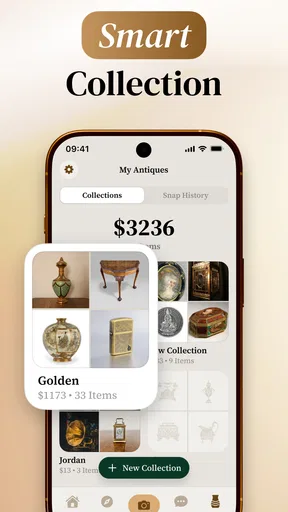
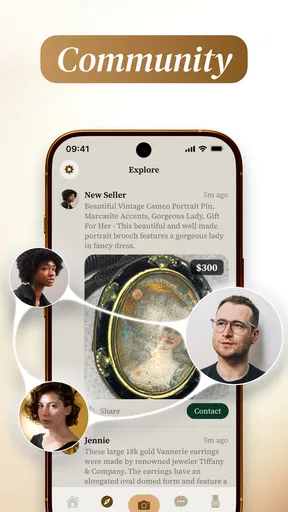
The developer’s focus, LeoStudio Global Ltd., is reflected in the app’s compact idea: use a phone image to make antique research less intimidating. That focus is a strength because the purpose is easy to understand. It can also be a limitation for users seeking a full collection-management system, detailed historical education, or a complete selling platform. I would choose it for first-pass identification rather than for managing an entire professional inventory.
How it compares with familiar alternatives
The usual alternative is a general image search. That option can be powerful when I already know the right descriptive words, but it often rewards confident guessing. The Old is more approachable when I only have a photograph and a vague sense that an object may be old. Its value estimate and rarity focus also direct attention toward practical next steps instead of leaving me with a page of visually similar results.
A second alternative is asking a dealer or experienced collector. Human expertise is slower to arrange but much better at noticing construction details, regional habits, repairs, and provenance. I would use the app before contacting someone so I could provide organized images and specific questions. That makes the eventual expert conversation more efficient rather than treating the app and the specialist as competing choices.
Reference books and museum catalogues remain better for learning a category deeply. They explain terminology and historical context in a way a quick image result cannot. If my goal were to become knowledgeable about a particular maker or period, I would not stop at the app. I would use it to identify a direction, then move to focused reading and comparison.
My connectivity verdict
I like The Old most when I am standing in front of an object with limited knowledge but enough curiosity to investigate it properly. The connected image workflow is convenient, the emphasis on estimated value and rarity gives the search a practical purpose, and the selling angle makes the result relevant to people clearing homes or considering a purchase. It is especially friendly to beginners who need a first vocabulary for asking better questions.
I would not rely on it as the sole authority for expensive, disputed, fragile, or provenance-dependent items. Weak reception can interrupt the process, and a photograph cannot reveal every factor that determines authenticity or market value. The best results come from preparing several clear images, preserving the original evidence, recording context, and treating the app’s response as a lead.
For a free education app with an Everyone rating, compatibility from Android 8.0 onward, and a current version of 1.0.5, it offers a sensible entry point into antique research. The paid items mean I would check the value of continued use before spending money, but the basic concept is easy to test. My recommendation is simple: try it when you want to decide what deserves deeper research, keep your expectations realistic, and bring in a human specialist when the object or the financial decision truly matters.
Pros
- Simple interface makes identifying antiques quick and approachable.
- Useful for beginners researching unfamiliar vintage objects.
- Can support preliminary research before consulting an expert.
- Convenient reference tool for flea-market and auction finds.
- Helps organize initial clues about an item's age and style.
Cons
- Identification results may be less reliable for rare or unusual pieces.
- Photos with poor lighting can lead to inaccurate assessments.
- It should not replace professional appraisal or authentication.
- Some features may require an internet connection to work properly.
- Valuations can vary widely depending on condition and market demand.
FAQs for The Old: Antique Identifier
What is The Old: Antique Identifier, and what can it identify?
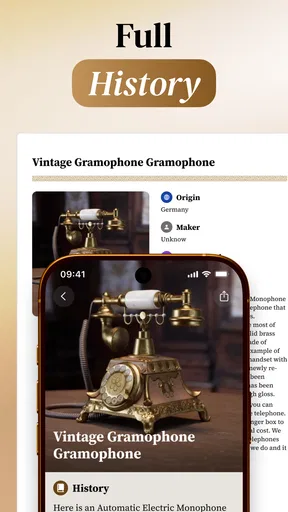
The Old: Antique Identifier is a mobile app designed to help users research and recognize antiques, vintage objects, collectibles, furniture, artwork, jewelry, and other older items. You can usually upload or take photos of an object and receive an estimated identification, background information, and sometimes a possible value range. Its results are best treated as a helpful starting point rather than a formal appraisal.
How accurate is The Old: Antique Identifier when estimating an item’s value?
The app can be useful for obtaining a quick preliminary opinion, especially when the object is photographed clearly and includes recognizable details, markings, or design features. However, antique values depend on authenticity, condition, provenance, rarity, maker, market demand, and regional pricing. The application should not replace an experienced dealer, certified appraiser, auction house, or specialist evaluation before selling or insuring a valuable item.
What kind of photos should I take for the best identification results?
For more reliable results, photograph the entire object in good, natural lighting and avoid glare, shadows, filters, and blurry images. Include close-ups of signatures, labels, stamps, hallmarks, maker’s marks, damage, construction details, and unusual features. It is also helpful to photograph multiple angles and provide any known history, age, origin, dimensions, or previous ownership information when the app allows additional descriptions.
Is The Old: Antique Identifier free to download and use?
The app’s availability, free features, and pricing may vary by platform, region, and version. Some functions may be accessible without payment, while advanced identifications, unlimited scans, detailed reports, or additional tools may require a subscription or in-app purchase. Before starting a trial, check the App Store or Google Play listing carefully for current prices, renewal terms, cancellation instructions, and whether payment is charged automatically.
Should I trust the app before buying, selling, or restoring an antique?
You should use The Old: Antique Identifier as an educational and research tool, not as the only basis for an important financial decision. An image-based result can miss reproductions, repairs, altered markings, hidden damage, or differences between similar objects. If an item may be valuable, obtain a second opinion from a qualified antique expert and verify authenticity, condition, provenance, and comparable sales before purchasing, selling, restoring, or insuring it.


